The University of Edinburgh Vet School (UK)
Officially known as the Royal (Dick) School of Veterinary Studies, the vet school at The University of Edinburgh is consistently ranked in the top 10 in the world (QS, 2024).
It has been preparing graduates for more than 200 years and is famously home to the Roslin Institute, where Dolly the Sheep was created.
The school is also home to the largest concentration of animal science-related expertise in Europe.
Here are more of the highlights from my visit!

Easter Bush campus
The Edinburgh Vet School is located at the purpose-built Easter Bush campus, just seven miles south of the city centre.
A sustainable campus, students typically live in the city and commute by bus out to campus every day, which takes about a half hour.
Arriving on site, students are instantly greeted by a peaceful setting, surrounded by the hills of the Pentland Hills Regional Park.

Founded in 1823 by William Dick, it is also one of the oldest vet schools in the world.

Modern facilities include a post-mortem room with a 2-way intercom, where students can observe complex and unusual post-mortems that the school undertakes for zoos, farms and private owners.

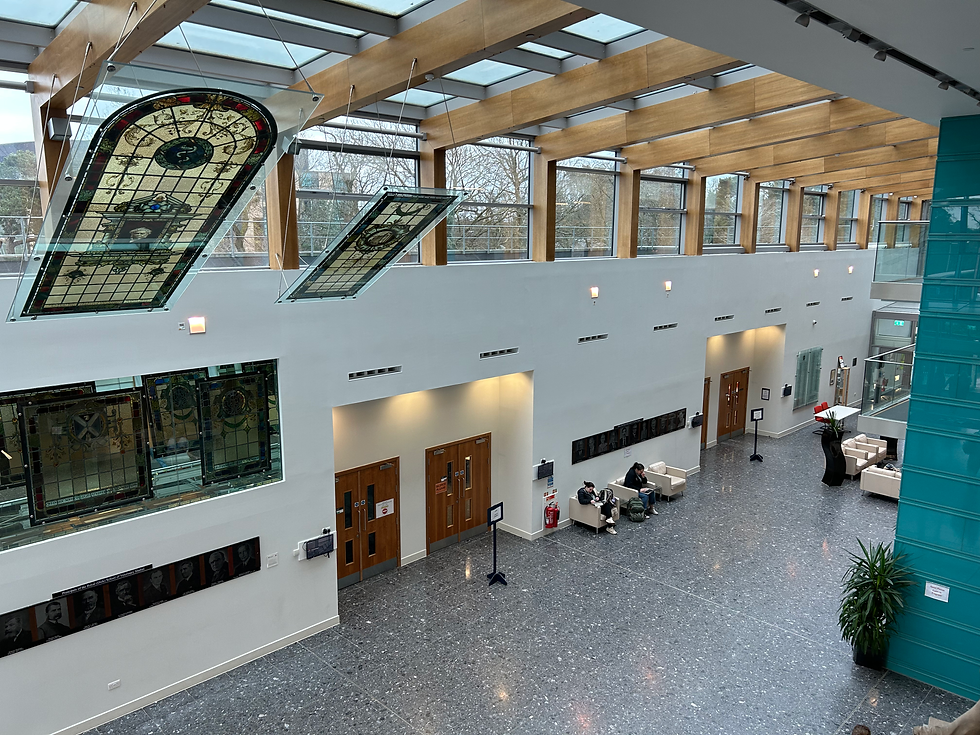
Study spaces include the Study Landscape, where individual and group study takes place, a quiet study space in the library and an Immersive Simulation Teaching Lab, the first of its kind in the UK.
This lab is a replica of a consultation room in the nearby Hospital for Small Animals, where staff reproduce as close to real life experiences as possible for students.


Although we didn't have time to see it, the school also has specialist equine hospital services, a sheep flock, a 240-cow dairy herd and a gym.
Academics
The vet school offers a 5-year program for students entering directly from high school, as well as a 4-year program for university graduates.
In the 4-year program, years 1 and 2 of the 5-year program are essentially merged.

Regardless, Edinburgh takes a more traditional approach to teaching in that the first years of the program are foundational, looking at normal functions of the animal body from cell level to the whole organism.
The final years are clinical, where students learn about disease and treatment.

The last year is made up of clinical rotations at its on-campus hospitals and clinical practices.
The school also pays for North Americans to prep for the NAVLE, and there are career fairs held in the final year in which Edinburgh graduates are highly sought after.
Admissions
Always check the university website for exact entry requirements, but university graduates are expected to have at least a 3.4 GPA.
High school students need at least 3 AP's, which must be taken in one sitting in order to demonstrate they can handle a high workload.
Animal handling and work experience is also required.

An in-person interview (MMI format) is also necessary, and the university travels to the east and west coasts of North America to host them.
In total, the university receives about 2,000 applications per year and aims to interview around 700 of them.

Summary: The University of Edinburgh Vet School
For students looking to study veterinary medicine in the UK, Edinburgh offers a fantastic option.
Unlike other programs, Edinburgh students study at the Easter Bush campus for all years of the program and also get to make use of the on-site hospitals and practices.
However, what is typical for Scotland and Edinburgh is that the school's staff are super friendly and welcoming, too.
And its peaceful setting in the hills offers a calmness that helps soothe the stresses that may come from studying at one of the world's top programs.


Comments